    Find Any Country Flag by Colors & Symbols

    Describe the colours, emblem and layout you remember to narrow 196 national flags to a shortlist. Each result explains how to recognise the design.

    Select Colors

    Symbol

    “None” means none of these six shapes. Some of those flags still carry a coat of arms or another emblem.

    Layout

    Know the country? Search by name

    Popular Flags

    Start exploring some of the world's most recognized flags.

    How to identify a flag you can only half remember

    You do not need to know flag terminology. Describe enough visible details to rule out the wrong designs. These four steps follow the filters above.

    1. Start with the colours you are sure about

    Pick only the colours you can actually picture. Colour choices are combined, so each extra colour makes the shortlist shorter. A wrong choice removes the right flag entirely, so two confident colours beat three uncertain ones.
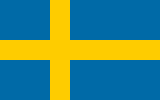
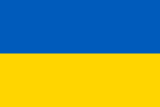
    Sweden and Ukraine are both tagged blue and yellow, so colour alone returns them together. Sweden has a yellow cross on blue; Ukraine has two plain horizontal bands.


    2. Name the thing in the middle

    Many memorable flags have one dominant shape. You do not need its formal name. A spoked wheel, plain disc or ring is filed under Circle. A sun goes under Sun when rays or a face are visible. Choosing the closest of the six shapes usually cuts the list to a handful.

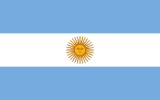
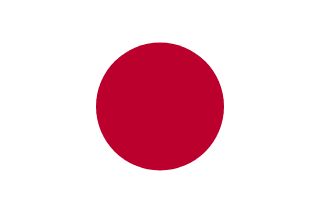
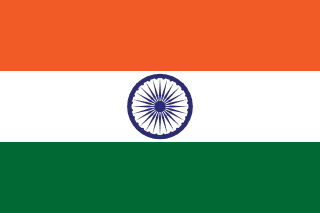
    India's 24-spoke wheel and Japan's plain disc are both Circle here; Argentina's sun with rays and a face is Sun. If you are unsure, leave the symbol on Any and filter by colour instead.

    3. Describe the layout, not the detail

    Horizontal bands, vertical bands, a central emblem or a symbol in a corner: that single choice removes most of the collection. It is also easy to remember after a brief glimpse.

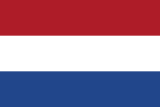
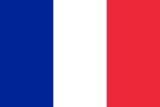
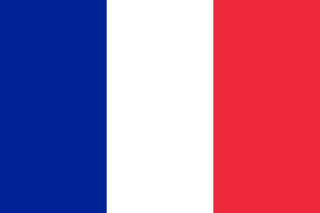
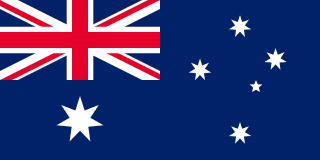
    The same three colours can form horizontal bands on the Netherlands flag, vertical bands on France, or a blue field with the Union Flag in Australia’s upper corner.

    4. Expect look-alikes, then separate them

    A good search may end with two or three candidates because some national flags are genuinely very similar. Compare details such as disc position, band order or star count to settle the result.

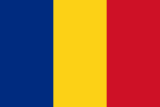
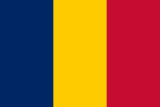
    Romania and Chad differ only in the shade of the blue band. The comparison guides handle cases like this one.

    What the filters actually do

    Colours combine

    Selecting red and white returns flags tagged with both, not either. Only dominant colours are recorded per flag, so colours that appear inside a coat of arms are not tagged.

    Symbol and layout are single choices

    Each flag has exactly one symbol category and one layout category. A flag with both stripes and a central emblem is filed under the feature that dominates the design.

    Name search is a shortcut

    Typing a country name filters live as you type and can be shared as a link with ?q= in the address. Press Enter to run it together with the colour and symbol filters.

    Flags that are genuinely hard to tell apart

    Some flags differ by nothing more than a shade of blue or the position of a disc. Each guide puts the look-alikes side by side and gives the checks that settle them.

    Common questions

    Why does my search return nothing?

    Too many selected colours are the usual cause. A flag must carry every colour you picked. Remove the colour you are least sure about first, then try Any for the symbol.

    Why is a colour I can clearly see not tagged on a flag?

    Each flag records its dominant colours: usually two or three for a simple design, and up to six for a complex one. Small colours inside a coat of arms may not be tagged.

    How many flags are in the collection?

    There are 196 flags with their own pages. The number differs from the count of UN member states because widely recognised flags outside that list are included where they are commonly searched for.

    Do the colours on a flag have official meanings?

    Sometimes, and far less often than the internet suggests. Where a meaning is set out in law or by an official body, the flag page says so. Where it is a popular explanation, it is labelled as an interpretation instead.

    What is the difference between the finder and the A–Z list?

    The finder is for when you remember the design but not the country. The A–Z directory is for when you already know the country and want to go straight to its page.

    Explore the whole collection

    All 196 flags have their own page, and 26 of them carry a longer write-up on construction and history with the sources consulted listed. Browse the complete A–Z directory, read the comparison guides, or see how this collection is put together and where it stops.