Dominica Flag
How to identify it
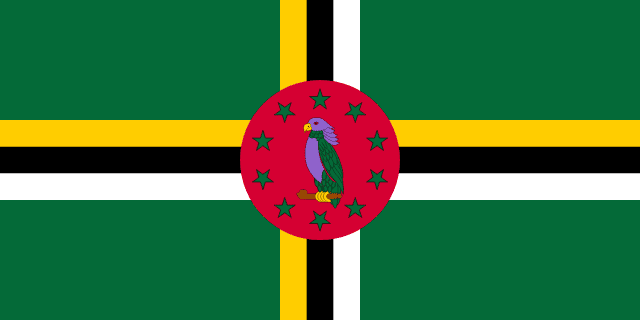
A green field with a cross of yellow, black and white stripes, and a red disc in the centre carrying a purple sisserou parrot ringed by ten green stars.
Design and construction
- Proportions
- 1:2
- Adoption and legal status
- Designed by playwright Alwin Bully and adopted 3 November 1978, the day of independence from the United Kingdom, with small modifications made in 1981, 1988 and 1990.
- Construction
- A green field with a centred cross of yellow, black and white bands, and a red disc bearing a sisserou parrot facing the hoist, encircled by ten green five-pointed stars.
Officially documented meaning
Per the Dominican government, the sisserou parrot, the endangered national bird, symbolises flight toward greater heights; the ten stars represent the nation's ten parishes; the yellow, black and white cross represents the Trinity, with yellow also standing for sunshine and the Carib and Arawak peoples, white for the island's rivers, and black for the soil and African heritage; green represents the island's forests.
History of the design
Purple appears in some renderings of the sisserou parrot, alongside the much larger green, red, yellow, black and white elements.
Sources
References for the design and any additional notes on this page.
- National Flag; Government of the Commonwealth of Dominica
- Flag of Dominica; Wikipedia